 I read a provocative piece the other day by Michael Hudson (”Why the U.S. Has Launched a New Financial World War — and How the Rest of the World Will Fight Back“), in which he argued that the ongoing currency wars are the fault of the US. Below, I’ll explain why he’s both right and wrong, and why he (and everyone else) should shut up and stop complaining.
It has become almost cliche to argue that the US, as the world’s lone hegemonic power, is also the world’s military bully. Hudson takes this argument one step further by accusing the US of using the Dollar as a basis for conducting “financial warfare.” Basically, the US Federal Reserve Bank’s Quantitative Easing and related monetary expansion programs create massive amounts of currency, the majority of which are exported to emerging market countries in the form of loans and investments. This puts upward pressure on their currencies, and rewards foreign speculators at the expense of domestic exporters.
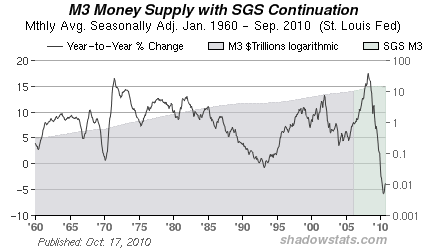
Hudson is right that the majority of newly printed money has indeed been shifted to emerging markets, where the best returns and greatest potential for appreciation lies. Simply, the current economic and investing climate in the US is not as strong as in emerging markets. Indeed, this is why the (first) Quantitative Easing (QE) program was not very successful, and why the Fed has proposed a second round. While there is a bit of a chicken-and-egg conundrum (does economic growth drive investing, or do investors drive economic growth?) here, current capital flow trends suggest that any additional quantitative easing will also be felt primarily in emerging markets, rather than in the US. Not to mention that the US money supply has expanded at the same pace (or even slower) as the US economy over the long-term.


0 comments